




The Embedded Vision Systems (EVS) group works within the Computer Vision Laboratory, Department of Automatic Control and Robotics, Faculty of Electrical Engineering, Automatics, Computer Science and Biomedical Engineering (EAIiIB), AGH University of Science and Technology in Krakow, Poland.

We are involved in research on implementation of various types of vision systems, which can operate in real time even for high-resolution video streams and sampling – up to UHD (3840 x 2160 @ 60 fps) – while maintaining low power consumption. As hardware platforms, we use reprogrammable FPGAs (Field Programmable Gate Array), reprogrammable SoCs (System on Chip) such as Zynq SoC, Zynq UltraScale+ MPSoC (Multi Processor System on Chip), or embedded GPU (Graphic Processing Unit) solutions such as Nvidia’s Jetson series. We are also interested in neuromorphic platforms.

Such systems are used in applications requiring very fast and efficient processing of video data so that the information obtained from them can be used almost immediately to support decision-making or control. Current research focuses on the following areas:

– control of autonomous, unmanned flying vehicles (drones, UAVs, UAS),

– vision algorithms for autonomous vehicles (self-driving cars) and Advanced Driver Assistance Systems (ADAS),

– object tracking and trajectory determination,

– use of LiDAR data for object detection and environment mapping,

– segmentation of foreground and moving objects, as well as elements of advanced video surveillance systems (AVSS – Advanced Video Surveillance Systems),

– implementation of embedded AI methods – deep convolutional neural networks and spiking neural networks.

Since 2011, members of the group have been co-organizers of the international conference DASIP (The Conference on Design and Architectures for Signal and Image Processing), cooperating with scientists from Germany, France, Italy, Spain, Portugal and Canada. We also present our research at the ARC (International Symposium on Applied Reconfigurable Computing), ICCVG (International Conference on Computer Vision and Graphics), SPA (Signal Processing Algorithms, Architectures, Arrangements and Applications), KKA (National Conference on Automation), FedCSIS (Federated Conference on Computer Science and Information Systems) conferences and in Journal of Real-Time Image Processing, Journal of Signal Processing and Sensors.

The team members teach in the following courses: Digital Image Processing and Vision Systems (Polish and English), Reconfigurable Systems, Structured and Object-Oriented Programming, Advanced Object-Oriented Programming, Algorithms and Data Structures, Architectures of Vision Systems, Image Compression and Coding Methods, Software-Hardware Implementation of Algorithms (Hardware-Software Vision Systems), Perception Systems and Algorithms in Autonomous Vehicles, Parallel Computing in CUDA, Biometrics, and HLS tools. Every year, several bachelor and master theses are defended as a result of cooperation between staff and students. In addition, our team closely cooperates with the AVADER Student Research Group, which brings together students interested in embedded vision systems, drones and autonomous vehicles.

TEAM MEMBERS

TomaszKryjak_evs_s

Tomasz Kryjak

professor

I am interested in embedded vision systems for autonomous vehicles, drones and advanced automated video surveillance. I implement these in FPGAs and reprogrammable heterogeneous devices. I also work with event cameras, neuromorphic computing and embedded AI systems.

I specialise in computer vision architectures, with particular emphasis on real-time systems, FPGA reconfigurable devices, embedded and intelligent systems. More broadly, my interests include many issues in the areas of automation and robotics, electronics and applied computer science. I am the author of 120 scientific publications.
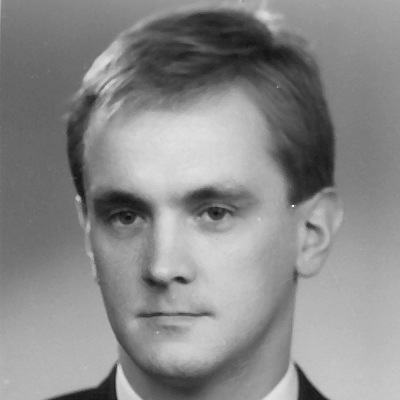
Marek_Grogon_evs_s

Marek Gorgoń

professor

I specialise in computer vision architectures, with particular emphasis on real-time systems, FPGA reconfigurable devices, embedded and intelligent systems. More broadly, my interests include many issues in the areas of automation and robotics, electronics and applied computer science. I am the author of 120 scientific publications.

bublinski1

Zbigniew Bubliński

PhD

I am interested in optimization of algorithms for digital image processing and analysis and embedded vision systems. I teach courses on vision systems and embedded vision systems.
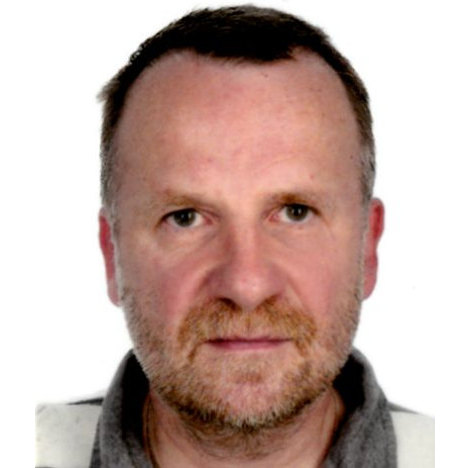
P_Pawlik2

Piotr Pawlik

PhD

I am interested in image analysis and processing with a particular focus on the topic of feature points. I teach courses in computer science and vision systems.

MarcinKowalczyk_evs_s

Marcin Kowalczyk

MSc

My interests are focused on real-time vision systems for autonomous robots. In my research, I use heterogeneous computing platforms and high-level environments enabling the modelling of algorithms and designed systems. My research also concerns the use of neuromorphic event sensors in modern vision data processing systems that require the development of new data processing methods.

HubertSzolc_evs_s

Hubert Szolc

MSc

I am interested in the control of autonomous vehicles based primarily on visual information. I use FPGAs and heterogeneous computing platforms for hardware implementation of the algorithms.

dav

Mateusz Wąsala

MSc

I am interested in embedded vision systems, in particular SLAM algorithms for ambient map generation and positioning of unmanned aerial vehicles. I also design and build equipment for these vehicles.

Krzysztof_Blachut_evs_s

Krzysztof Błachut

MSc

My research interests include embedded vision systems in flying and driving autonomous vehicles and in video surveillance systems. I use heterogeneous computing platforms for their implementation, with a particular focus on FPGAs.

Michal_Danilowicz_evs_s

Michał Daniłowicz

MSc

I am interested in control systems based on computer vision and artificial intelligence, in particular object detection and tracking. I investigate the possibility of their implementation on platforms such as GPUs and FPGAs.

Piotr_Wzorek_evs_s

Piotr Wzorek

MSc

I am interested in vision systems, deep neural networks and other artificial intelligence algorithms. I work on their hardware acceleration on embedded, GPU and FPGA platforms.

Kamil_Jeziorek_eve_s

Kamil Jeziorek

MSc

I am interested in vision systems that use event-driven cameras and methods based on deep neural networks. I am working to explore the potential of implementing techniques such as Graph Convolutional Networks and Vision Transformers on various computing platforms, with a particular focus on SoC FPGAs.

RESEARCH PROJECTS

External:

  • 2026–2028 – “EEVONN: Embedded Event-Based Visual Odometry Using Neural Networks”, National Science Centre, Poland (Preludium). Principal Investigator: Mateusz Wąsala.
  • 2025–2028 – “K+Z: Improving Perception through the Integration of Frame and Event Cameras”, National Science Centre, Poland (Preludium). Principal Investigator: Kamil Jeziorek.
  • 2025–2028 – “Hardware-Aware Neural Network Design for Event-Based Object Detection”, National Science Centre, Poland (Preludium). Principal Investigator: Piotr Wzorek.
  • 2024–ongoing – “Integration of Reasoning, Learning, Optimisation and Interpretation for Accelerated Commercialisation of Next-Generation Intelligent Software Systems”, funded under the ARTIQ programme run by the National Centre for Research and Development (NCBR) in cooperation with the National Science Centre (NCN).
  • 2023–ongoing – “Holistic and Integrated Asset Management for Europe’s RAIL System” (IAM4RAIL), EU-Rail FP3 project funded by Horizon Europe, no. 27.27.120.70690.
  • 2021–2026 – “Acceleration of Processing Event-Based Visual Data with the Use of Heterogeneous, Reprogrammable Computing Devices”, National Science Centre, Poland (Preludium). Principal Investigator: Marcin Kowalczyk.
  • 2020-2022 – „The development of solutions using modern vision sensors (event cameras) for applications related to autonomous, unmanned aerial vehicles” – an AGH project within the framework of Initiative for Excellence – Research University. Project leader: Marek Gorgoń, Contractors: EPAS group
  • 2017-2021 – „The development of computing resources organization in latest generation of heterogeneous reconfigurable devices enabling real-time processing of UHD/4K video stream” – grant no. 2016/23/D/ST6/01389, National Science Centre, Poland (Sonata 12). Project leader: Tomasz Kryjak, Contractors: Dominika Przewłocka-Rus, Marcin Kowalczyk, Piotr Janus, Krzysztof Błachut, Hubert Szolc, Mateusz Wąsala, Piotr Ciarach
  • 2015-2016 – „A functional model of a machine with a vision system for scarification and evaluation acorns liveness based on automatic recognition of the topography of mummification changes” – National Center for Research and Development project, part of the Applied Research Program. Contractors: Marek Gorgoń, Tomasz Kryjak
  • 2011-2013 –  „Reconfigurable implementation of hardware modules for processing and analysis of complex video signals”, grant no. 2011/01/N/ST7/06687, National Science Centre Poland (Preludium). Project leader: Tomasz Kryjak
  • 2011-2013 – „Intelligent surveillance system for space and objects of particular importance – SIMPOZ” – grant no. 0128/R/t00/2010/12, Ministry of Science and Higher Education of the Republic of Poland. Contractors: Marek Gorgoń, Tomasz Kryjak